

Balloon has become a familiar name in crash style gaming because it keeps the core idea visible at every second. Players PJOK watch one multiplier rise, decide a moment, then move on without long setups or complex menus. In a news style overview, the focus stays on how rounds work, why the format feels approachable, plus how routines can keep play measured.
Balloon crash games and the appeal of simplicity

Crash games attract attention because the rules can be understood within a single round, even for first time readers. The screen shows one main number that grows, then ends suddenly at an unknown point, so the loop stays easy to follow from start to finish. In Balloon, that clarity matters because players spend more time making timing choices than learning layered mechanics.
The pace also fits modern short sessions, where people want quick outcomes rather than long sequences with many steps. A round finishes in seconds, so attention stays on the rising multiplier, the cashout moment, plus the immediate result that follows. With Balloon, the fast loop encourages small experiments with timing because players can test an idea across several rounds without waiting long.
Another reason the format resonates is the clean connection between risk plus reward, shown on the same screen in real time. Staying longer can raise the return, yet it also raises the chance of losing the stake when the round ends, so the tradeoff stays direct. In Balloon, many players respond well to that transparency because it frames the game as timing management rather than guesswork.
How Balloon rounds are structured for quick play
Most rounds follow a simple loop that repeats with very small changes. A start signal appears, the multiplier climbs, then the end arrives without warning. Because the structure stays consistent, players can focus on timing instead of relearning rules.
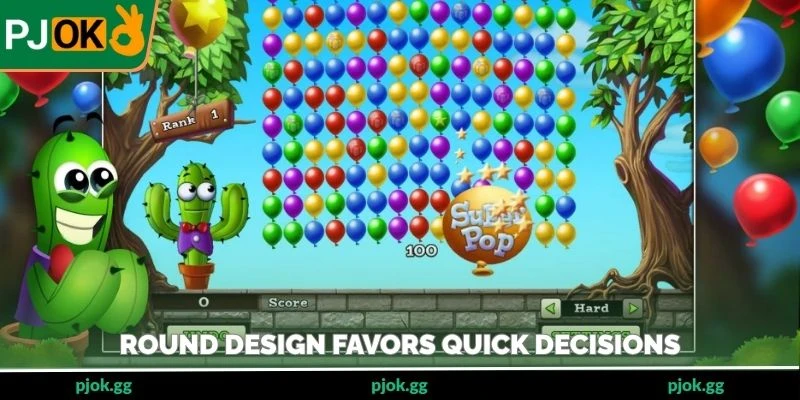
Inflation phase and rising multiplier
The round begins with a calm start cue, then the multiplier climbs in a smooth curve. Players watch the growth rate to sense whether the pace feels slow or sharp, then they decide how long to stay in. In Balloon, that early climb is where many players set their expectations for the rest of the round.
A useful habit is to treat the opening seconds as information, not a promise of what comes next. The multiplier can rise quickly, yet the ending can still arrive with no warning. By focusing on process rather than hope, players can keep choices consistent across many rounds.
Pop moment and payout cutoff
The key tension comes from the instant the round ends, because payouts stop at that exact point. Players who remain in the round after the pop receive no return for that stake, even if the climb looked strong. In Balloon, this cutoff is what makes timing more important than prediction.
Many players misread the end as something they can foresee through patterns. In reality, the safest mindset is to expect any round to end at any time. When players plan for uncertainty, they reduce the urge to chase a loss with larger stakes.
Cashout options and timing
Most interfaces offer manual cashout, plus an optional auto cashout setting that triggers at a chosen multiplier. Manual timing rewards attention, yet it can also invite hesitation when the number keeps rising. In Balloon, auto cashout can reduce stress because it turns the choice into a plan made before the pressure starts.
A practical approach is to test auto cashout for a short set of rounds, then compare the feeling to manual play. Some players prefer the calm of a preset trigger, while others like direct control. Either way, the goal is to reduce rushed decisions that break a steady routine.
Player routines that keep sessions controlled
Quick rounds can feel exciting, so routines matter more than many players expect. A small plan can limit emotional swings, plus it can protect time as well as budget. The best routines are simple enough to repeat even when results vary.

Small stakes and steady pacing
Using small stakes can keep each result from dominating the mood of a session. It also allows more rounds within a fixed budget, which helps players learn their own timing habits. In Balloon, steady pacing often matters more than searching for a perfect moment.
A useful pacing method is to set a fixed number of rounds, then pause to review outcomes. This pause breaks impulsive loops, plus it creates space to decide whether to continue. Over time, players who pace themselves tend to experience fewer sharp swings in behavior.
Pre set exit points
Exit points work best when they are defined before the session starts, not during a high tension moment. Some players choose a small profit target, while others set a loss limit that ends the session immediately. In one comparison under Rocket Crash, similar exit rules often lead to calmer play because the plan stays stable even when outcomes feel random.
A strong exit point is realistic, easy to remember, plus tied to the budget for that day. If the target is too ambitious, the player may ignore it once the multiplier rises. If it is too tight, the player may stop before learning anything about their own timing.
Knowing when to end sessions
Ending a session is easier when the decision is linked to time, not only money. A timer creates a clean stop that does not depend on the last result being a win or a loss. In Balloon, time based limits can prevent long sessions that drift away from the original plan.
Another cue is mental fatigue, which shows up as rushed clicks or constant second guessing. When focus drops, decision quality drops with it, even if the stakes remain small. Stopping at the first sign of fatigue can protect both budget plus mindset.
Conclusion
Balloon remains popular because it turns a full round into a clear decision made in seconds. Readers who enjoy quick play can still keep sessions controlled by pacing, using exit points, plus respecting time limits. By treating each round as a repeatable process, players can stay calm, reduce impulsive moves, then leave the session on their own terms.

The influence of Pori Moni on the success of the brand is undeniable. By combining strict regulatory compliance with a passion for technological innovation, the CEO has built a sustainable ecosystem for enthusiasts. As the platform continues to evolve, the focus remains on integrity and excellence. Experience the professional gaming standards and diverse entertainment options by joining PJOK today!